
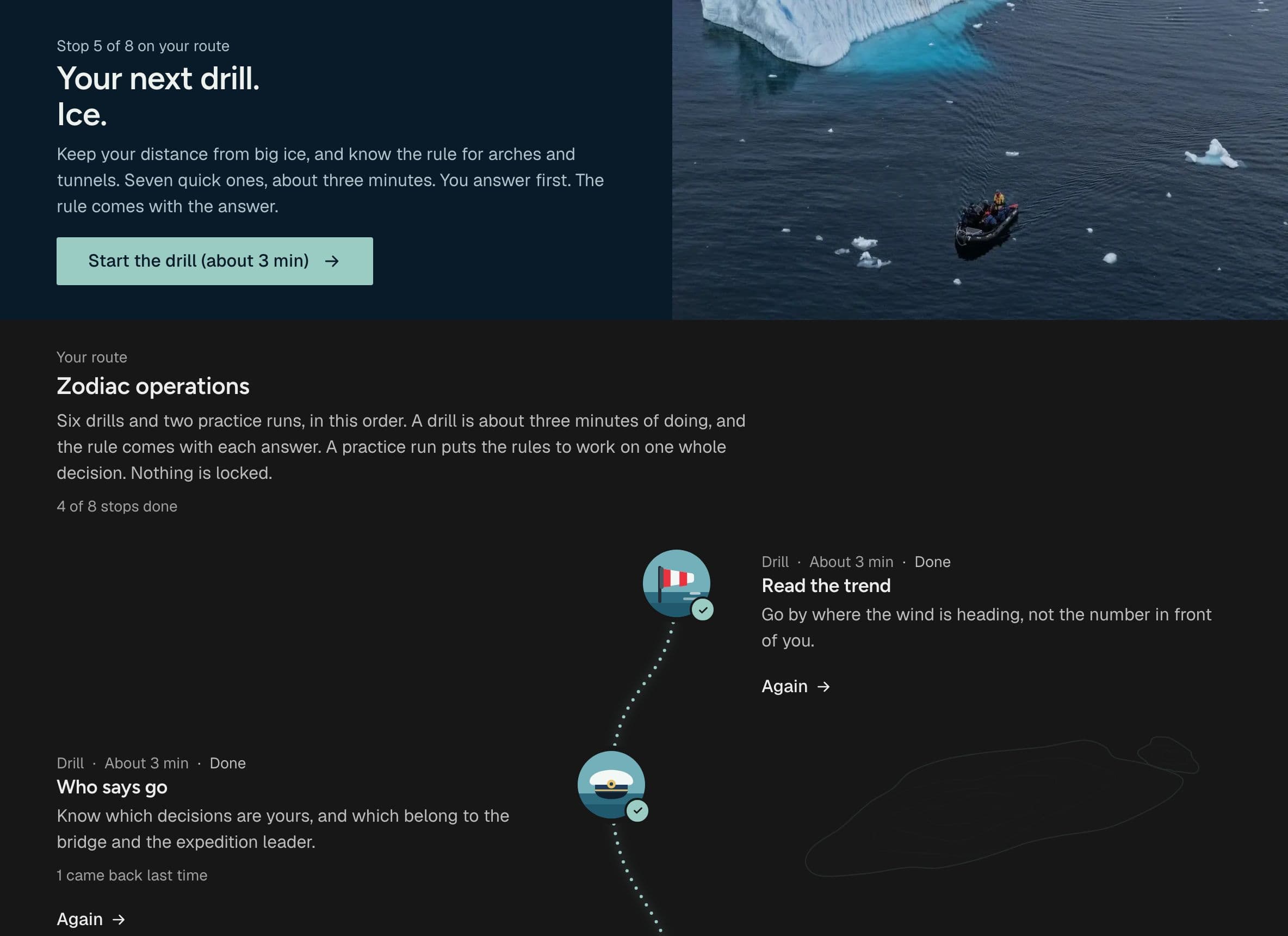
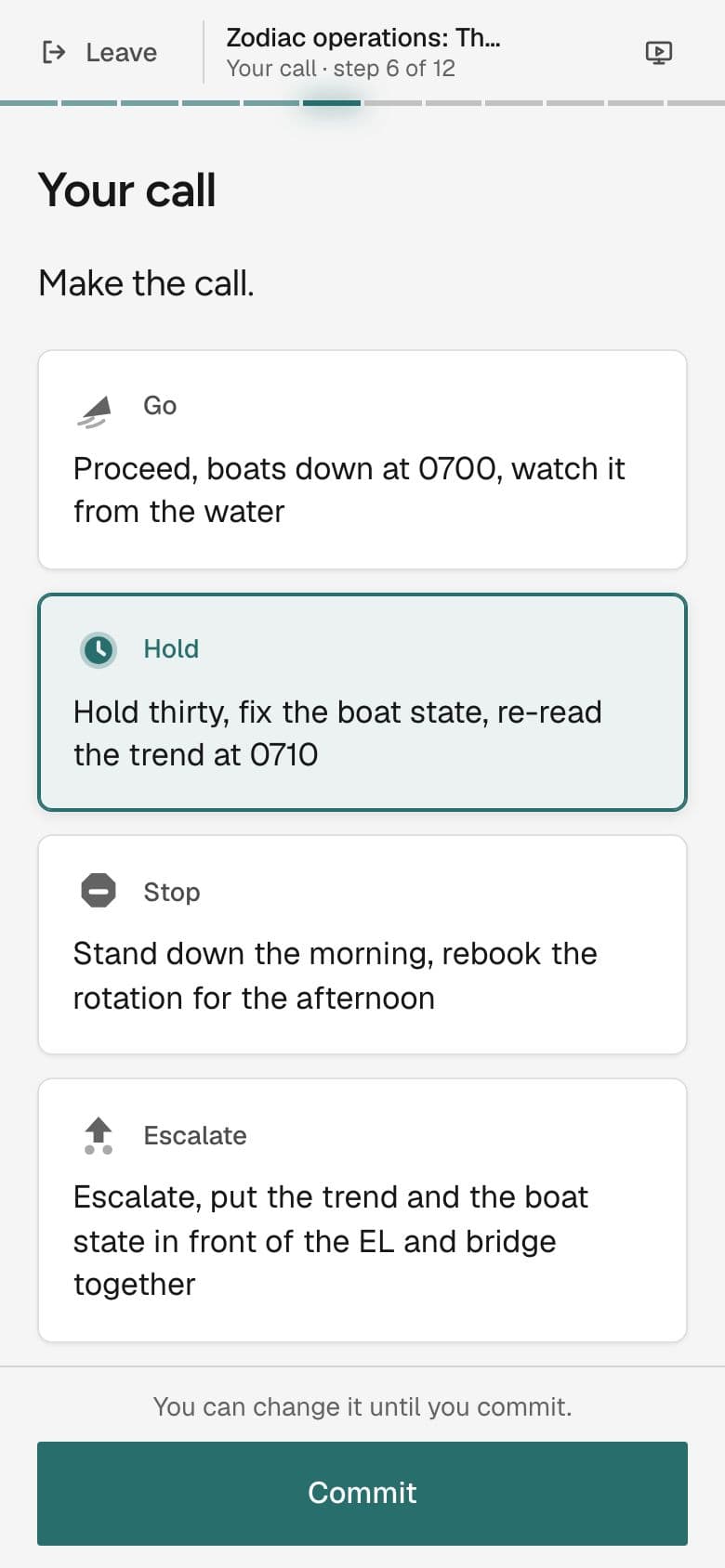
The route on a laptop, and a practice run on a phone. Screens from the sample module, Zodiac operations.
Why practise judgment
A guide learns judgment by making calls. Most mornings don't ask for one.
Boat handling is drilled on the water. The decision to launch is harder to practise: the mornings that test it are rare, and when one arrives, guests are already on the gangway.
Sound Call gives guides those mornings ahead of time, rebuilt from days that really happened and judged against the procedures your company already follows.
How it works
Drills teach the rules. Practice runs test them on a whole day.
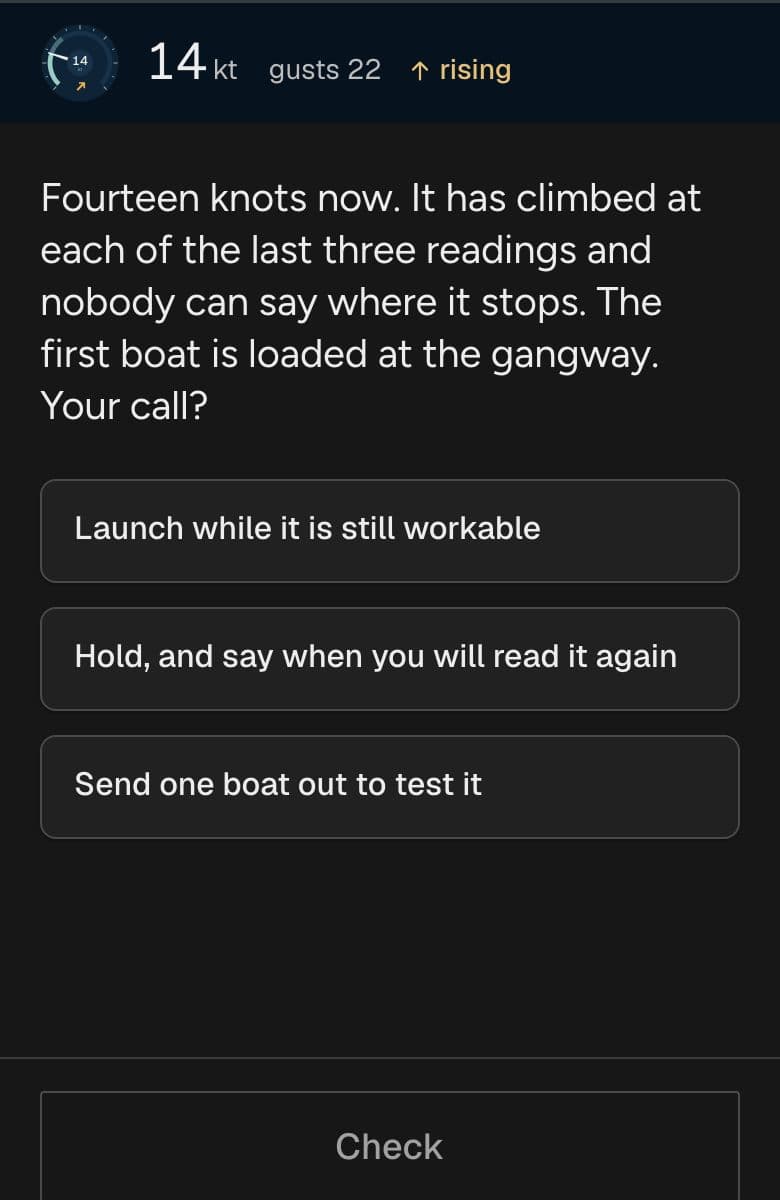
One rule. Answer first.
About seven quick questions on one rule, such as reading the wind trend. The rule comes with the answer, linked to the line of procedure it comes from. A miss comes back before the drill ends.
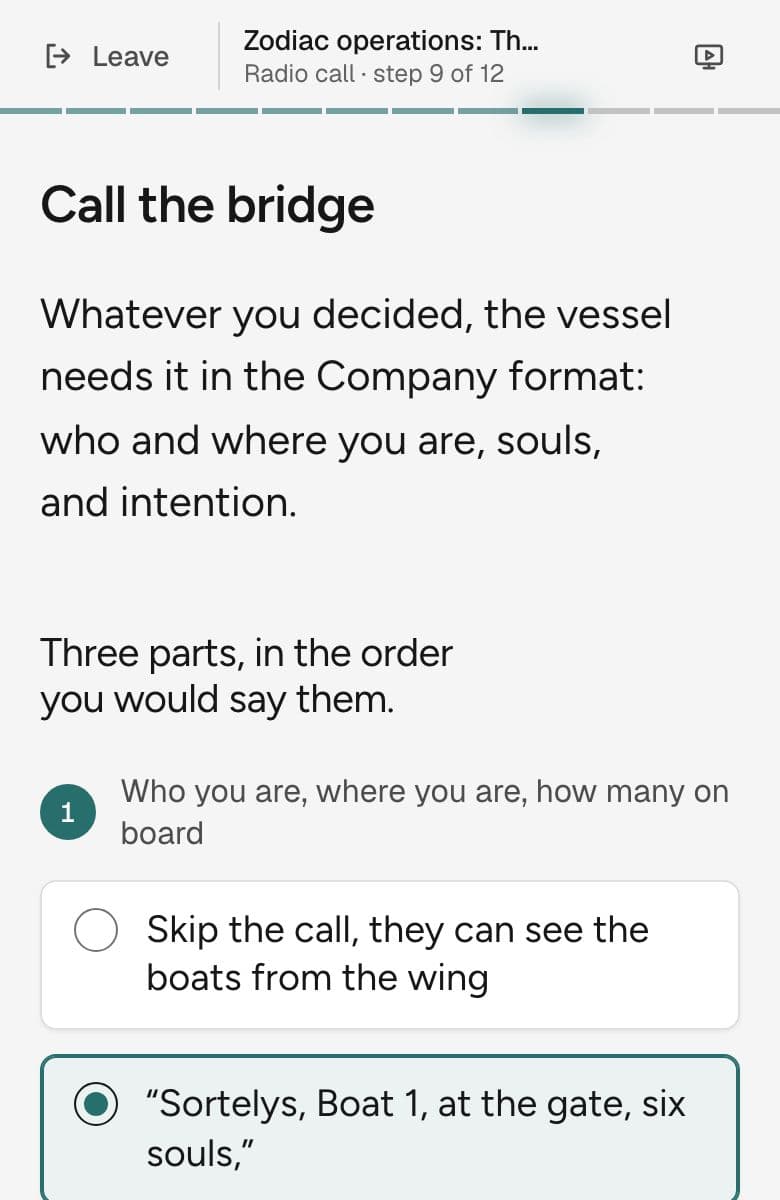
A recorded morning. Their call.
One real archived day, step by step. Read the board, rank what matters and take the pressure from the expedition leader. Commit to Go, Hold, Stop or Escalate and say how sure you are. Then the weather turns, and the call goes to the bridge by radio.
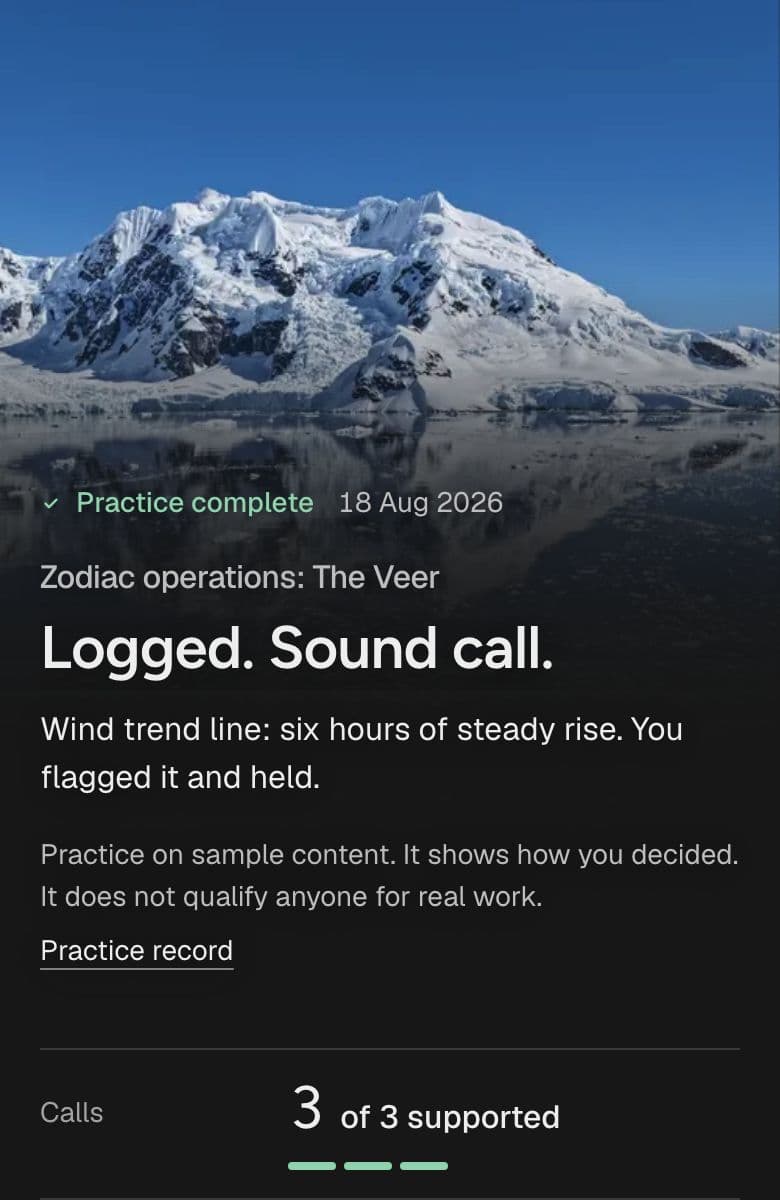
Every call beside its source.
The verdict first, in one line. Then each decision: what the guide chose, what the procedure says, and the document's own words with section and version.
The debrief
Nothing in the debrief is the app's opinion.
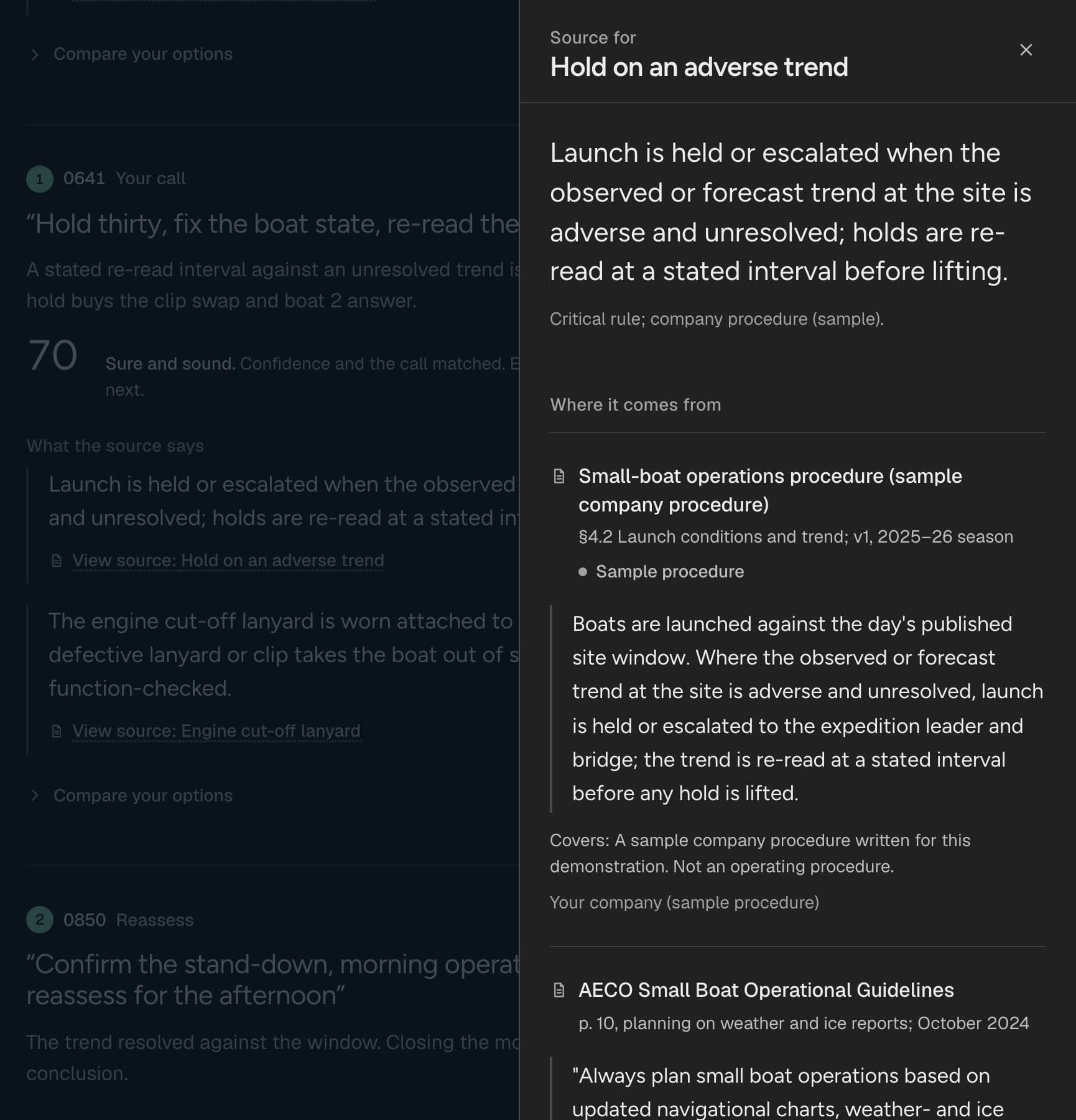
Every judgment traces to a sentence in a company document. Confidence is recorded before any feedback, so sure and wrong shows up differently from unsure and right.
- The guide's call, 0641Sound
“Hold thirty, fix the boat state, re-read the trend at 0710.”
- What the source says
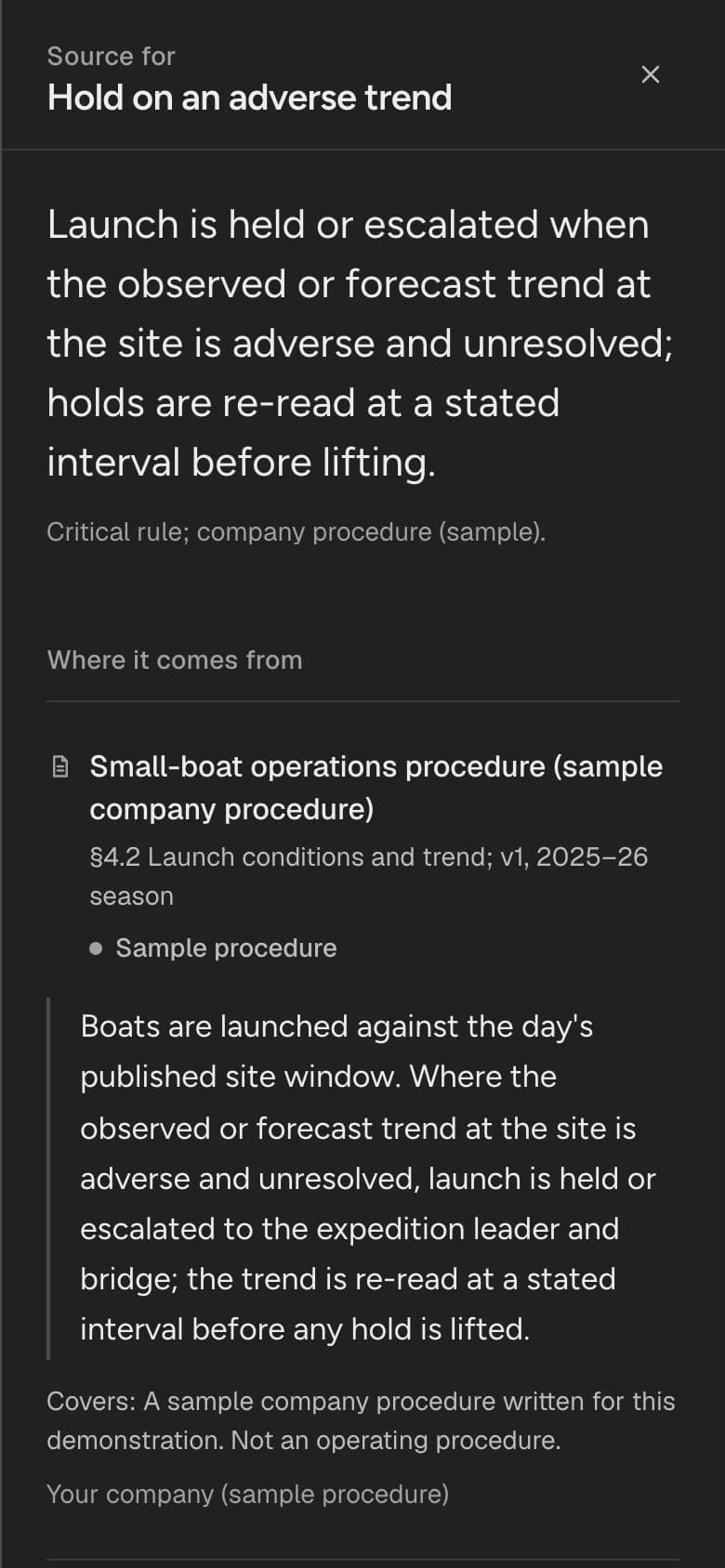
Launch is held or escalated when the observed or forecast trend at the site is adverse and unresolved; holds are re-read at a stated interval before lifting.
- Where it comes from
Small-boat operations procedure§4.2 Launch conditions and trend, version 1, 2025-26 season
The day itself, on the record.
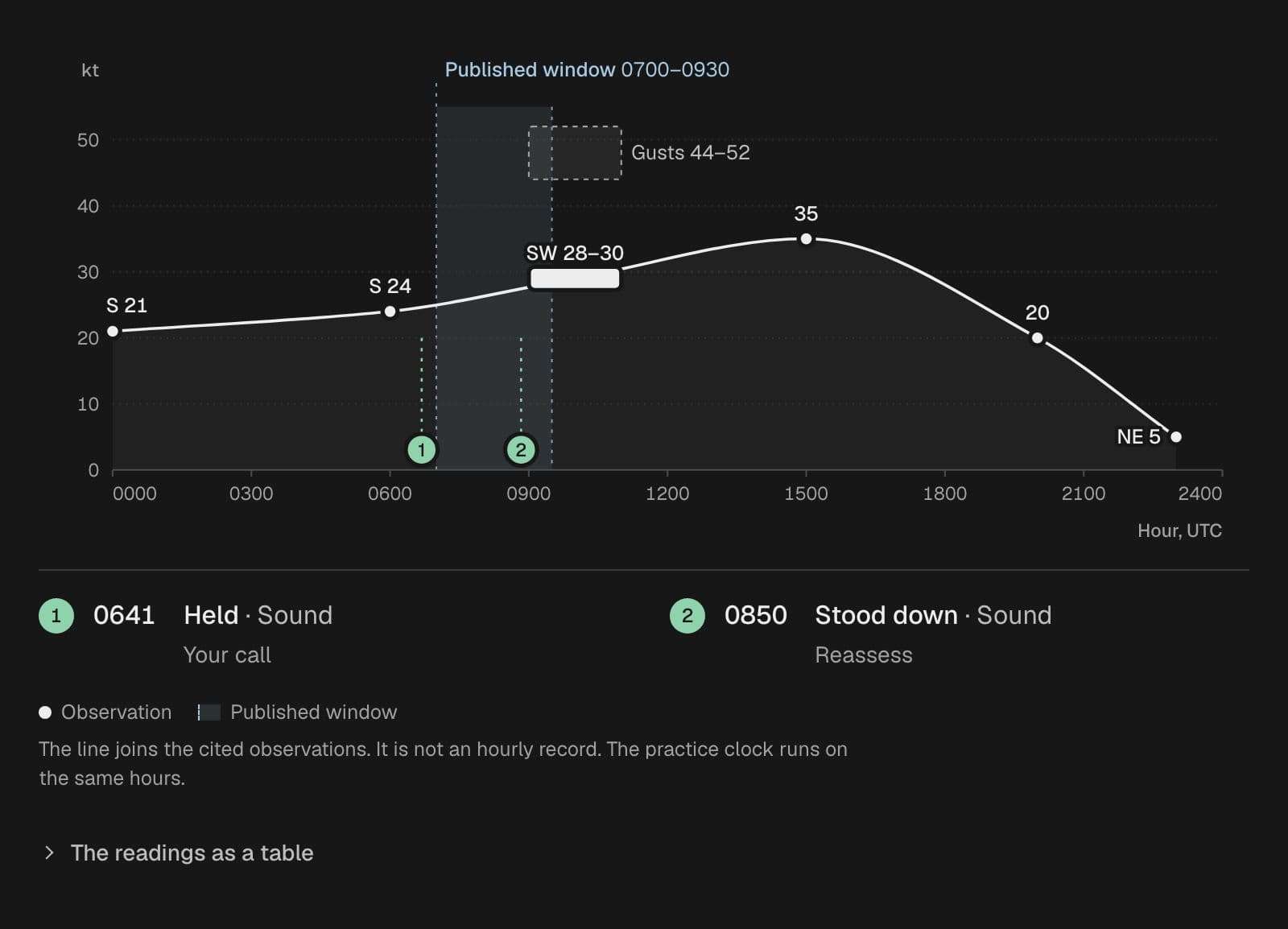
Practice runs are built from archived weather. The debrief plots the day's wind through the cited observations, with the published window and the guide's calls marked on it.
Sample run: Base Esperanza, Hope Bay, 13 January 2025, from NOAA observations.

When a procedure changes, the practice that depends on it is marked due.
For trainers
Your documents become reviewed practice.
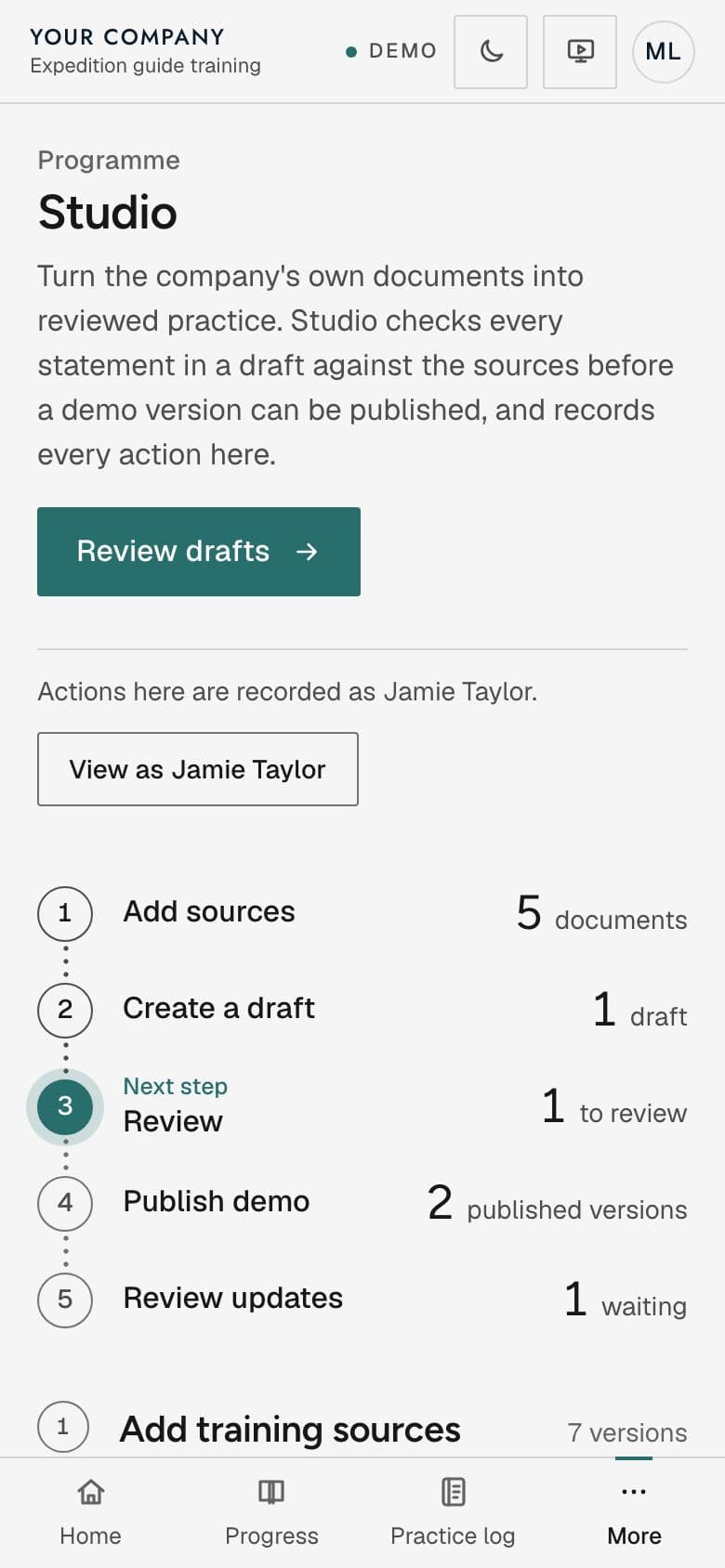
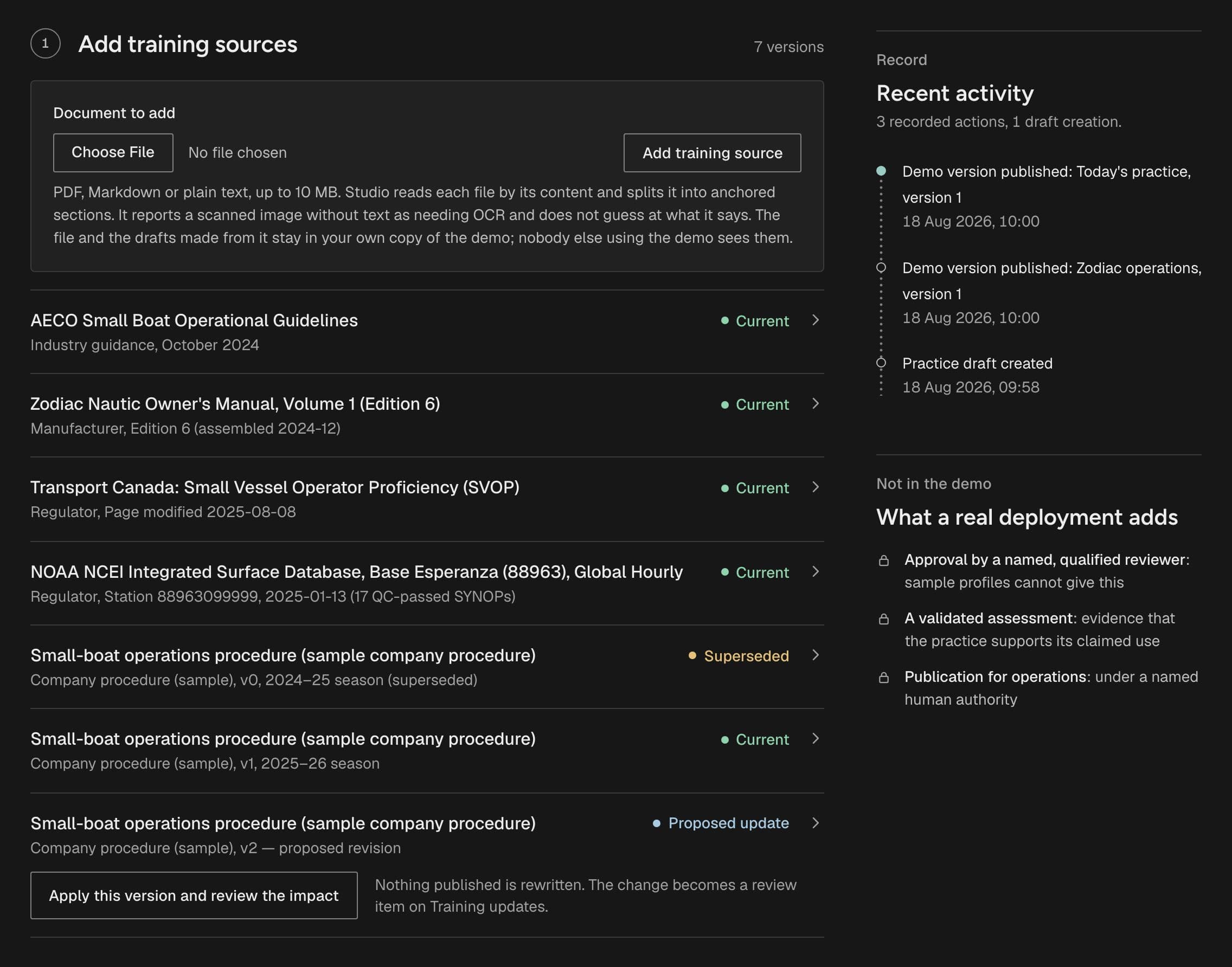
Trainers work in Studio. Add the company's documents, create a draft drill or practice run from them, review it, then publish. Every action is recorded.
Built from your documents
Procedures and guidance go in as versioned sources, split into sections. Every exercise, option and scored step names the statements it rests on.
Checked before anyone sees it
Studio checks every statement in a draft against the sources and blocks a draft that doesn't hold up. Then a person reviews it.
Published once
A published version is never edited. New work becomes a new version, so a debrief always matches what the guide practised.
Kept current
When a source changes, Studio works out which rules changed and who has practised them, and marks that practice as due again.
What it records
No points, streaks, timers or leaderboards.
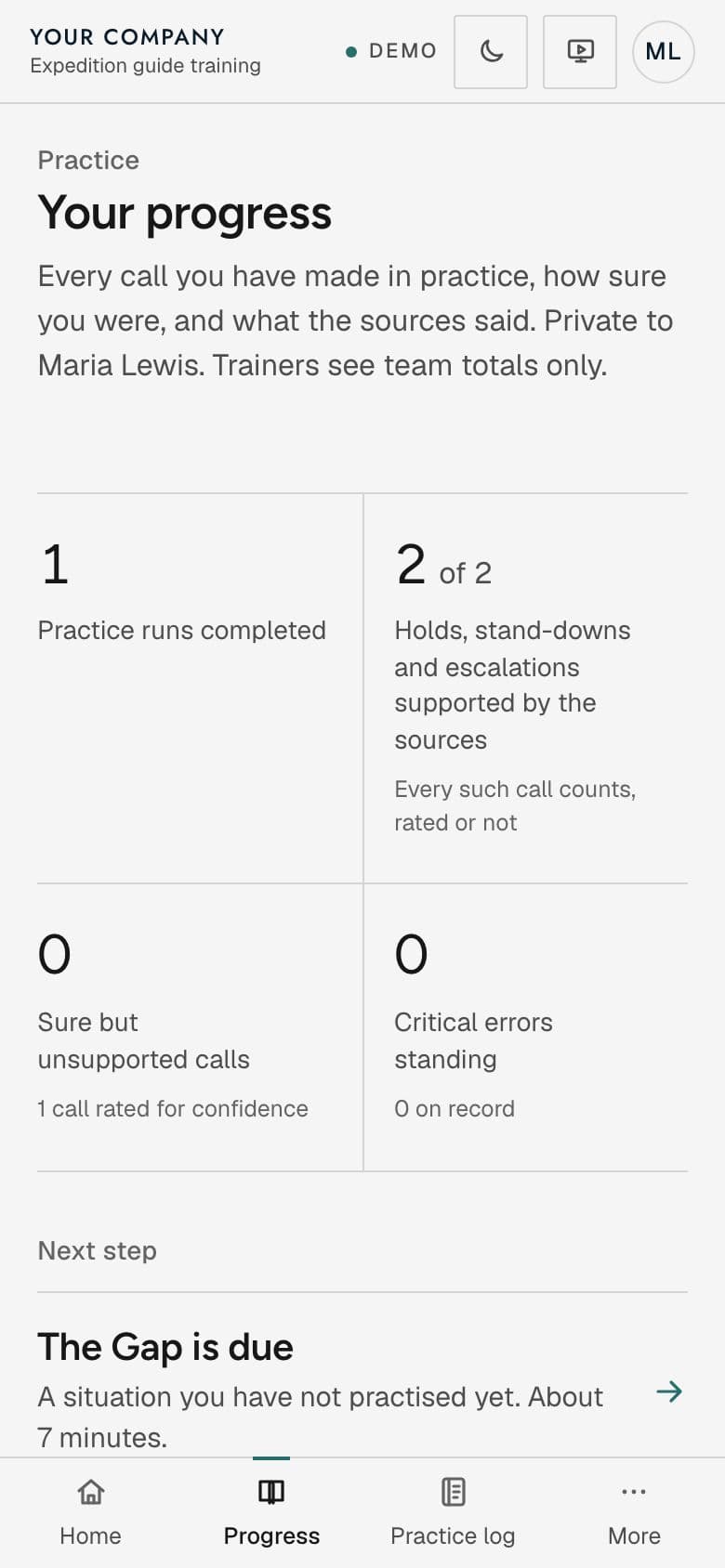
Progress counts what a guide has practised and how sure they were. It is private to them. Trainers see team totals, never one person's answers.
The record shows practice. It is not a qualification, and finishing it doesn't authorize anyone for real work. That judgment stays with your people and your process.
Beyond boats
The sample module is about boats. The method fits any procedure.
Zodiac operations, the sample module, is about deciding whether to launch small boats from an expedition ship. Drills, practice runs and debriefs are built the same way from whatever documents a company adds.
- Sample module
- Zodiac operations: eight stops, six drills and two practice runs
- Works on
- A phone or a computer, in light or dark
- Your brand
- Your logo and colours, checked so they stay readable
- Built by
- New Light Studio, strategy and development for expedition and adventure travel

Make the call yourself.
The demo is shared by invitation. Enter the passphrase you were given, run a practice morning, and open its debrief.